LOOKING THROUGH A TELESCOPE
Looking through a telescope is fascinating. You can vew tiny little objects like they are right in front of you. The moon can be seen in great detail. It is mesmerizing just getting out the telescope and pointing it at the sky to see what you can find.
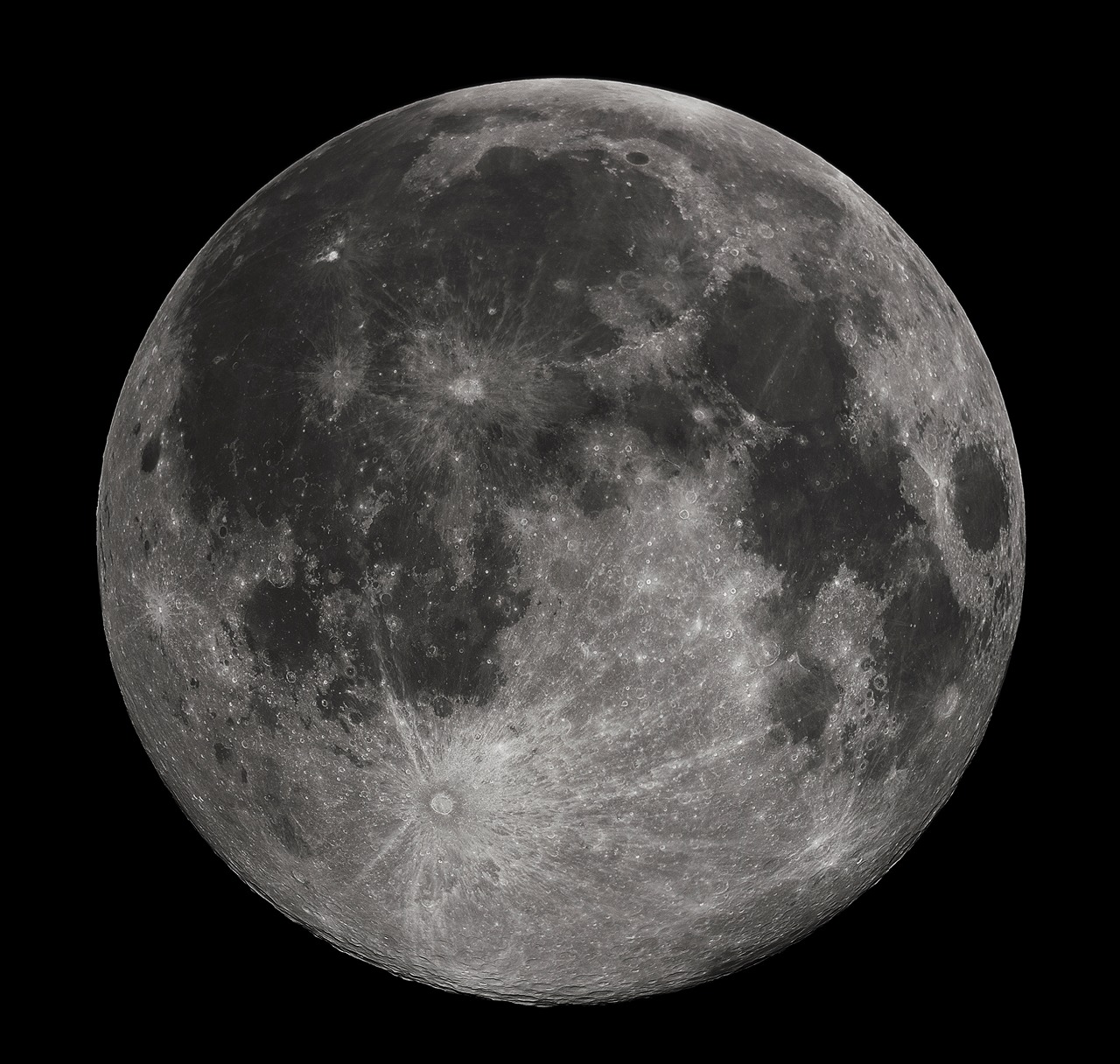
Moon
The moon is the most obvious object in the night sky because it is big, bright and easy to see. Each day the look of the moon changes due to its movement around the sun and the earth and the light shining on it from the sun.
With a small telescope you can observe many different features on the moon. Some of these are mountains, craters, maria, or "seas" and the terminator which is the line between dark and light and where you can see the greatest contrast on the moon.
The best time to observe the moon is when it is in between the last quarter and first quarter because the angle of the sun shining on the moon offers the brightest view.
It is fascinating to observe the moon during a lunar eclipse as you can see the Earth's shadow moving across the lunar features. You can discover when lunar eclipes will happen by searching on the internet.
Sun
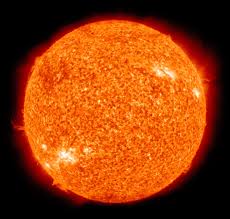
The Sun is classified as a star and is the closest star to Earth.
When viewing the Sun you must take special precautions as your eye can be damaged by this star. A special solar filter can be purchased and placed over the front end of the telescope. Looking at the sun is one of the few objects that you can see during daylight hours.
When observing a solar eclipse of the moon passing between the Earth and the Sun you can see the Sun's corona.
NEVER LOOK DIRECTLY AT THE SUN THROUGH A TELESCOPE!
The intense light from the sun, when magnified by a telescope, can fry the retinas of your eye in less than a second. The only safe ways to observe the sun are indirectly by projection or by the use of a solar filter that fits over the front end of telescope's tube. Click here for details on OBSERVING THE SUN SAFELY!
Planets
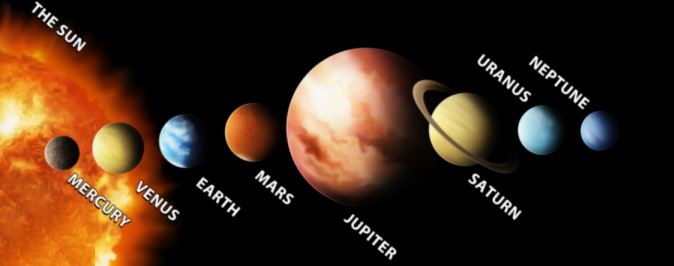
Planets are easily observed from the city as some of them are quite bright. A large telescope will provide good detail on certain planets. The best conditions to see planets is a dry atmosphere with little or no clouds and no moon.
Venus
On Venus you are not able to see any surface detail because the planet is covered with clouds. Venus is easy to find in the night sky as it is one of the brightest things in the sky. It can be called "the morning star" or "the evening star" as it can be seen before or after sunset.
Mars
Mars is a planet that changes constantly. It is quite difficult to see because of its small size and the distance away from Earth. In a large telescope you may be able to see the polar ice caps and some dark surface features ("canals") depending upon the night conditions.
Jupiter
Jupiter is the largest planet in our solar system. It is easy to find and usually looks light a small bright yellow disc with two brown cloud bands on each side. Jupiter also has 63 known moons orbiting the planet, the larger of these are Io, Europa, Callisto and Ganymede. These moons change position each night and are quite interesting to watch.
Saturn
Saturn is one of my favourite planets because of its rings and it is easy to spot because of its brightness. You are not always able to view the rings due to the orbit of this planet. Saturn has 60 moons - Titan, lapetus and Phoebe are some of these.
Uranus, Neptune and Pluto
Because of their distance from Earth, these planets are difficult to see.
Asteroids
Like the outer planets, asteroids are hard to find in small telescopes. Because they are so tiny, they appear in a telescope as pin prics of light, like stars.
Nebulae
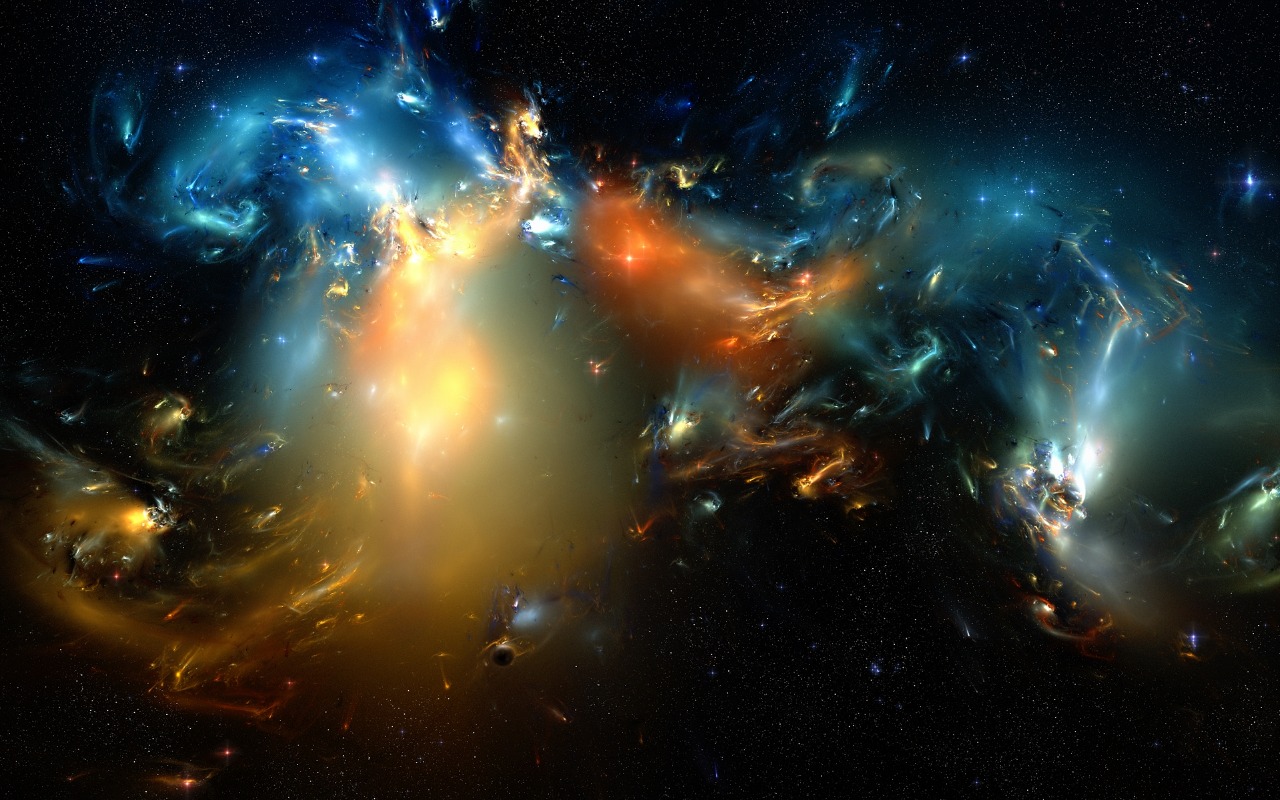
Nebulae are clouds of gas and dust in space.
You can see the Great Nebula in the constellation Orion (M42) with the naked eye. You can see the gas in some detail but not as well as in the photo below which is taken by the Hubble Space Telescope.
Galaxies
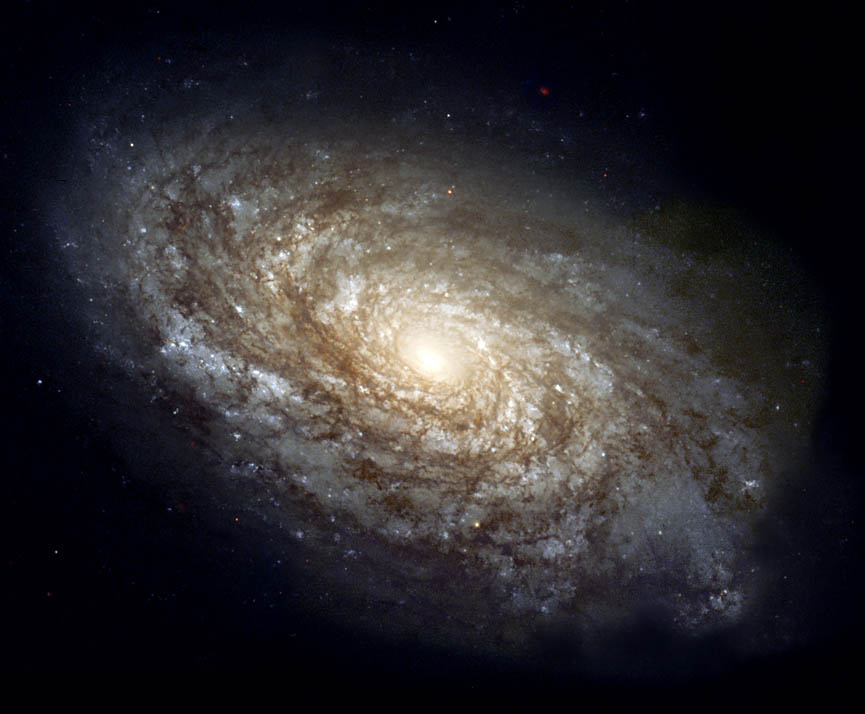
Galaxies are large systems of stars held together by gravity. They come in many shapes and sizes.
Most galaxies are found in groups. The Andromeda galaxy (M31) can be seen with the naked eye. To be able to spot galaxies the conditions must include a dark sky.
The best know galaxy in the world is the Milky Way because we live in it.
Comets and Meteors
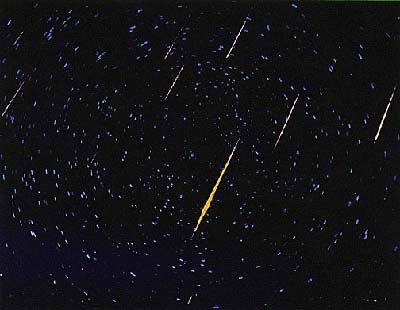
Have you seen a comet or a meteor whoosh across the sky? I have seen quite a few meteors.
Comets
Comets are collects of ice, dust and small rock particles that vapourise as they head towards to sun and leave a white tail that we can see.
Many new astronomers spend hours searching the sky through binoculars to try and sight one of these.
Meteors
Meteors are debris (dust, rocks) that float about the solar system. When meteors enter our atmosphere travelling at thousands of kilometres per hour they burn up because of the friction. These can sometimes be called shooting stars. If the meteor lands on Earth it is then called a meteorite.