
TYPES OF TELESCOPES
The best instrument for stargazing is your own two eyes, although there’s nothing like bringing lunar craters, star clusters, or nebulae into focus through a telescope. You can buy a good entry-level telescope for a few hundred dollars up to a thousand or more.
There are many types of telescopes to use. Below are some of the most common telescopes.
Reflector
A reflector telescope uses mirrors instead of lenses. At the base of the telescope the primary mirror reflects the light to another mirror which the projects the light through the eyepiece.
The Hubble Space Telescope is currently the biggest space telescope and this is also a reflecting telescope. It is 13 metres long and weighs 1.1 tonnes with a reflector that is 24cm in diameter.

Refractor
A refractor telescope is a long tube with a series of lenses to gather and focus starlight.
This type of telescope works very similiar to a magnifying glass. The light is bent and bought into focus by a convex glass lens. Because the lens is thicker in the middle than the edges, it bends light more at the edges which allows all of the light to come together at a focus point and this is where the image is created.
Refractors are quite large so this makes them difficult to move but they deliver the clearest view because of the high-quality lenses.

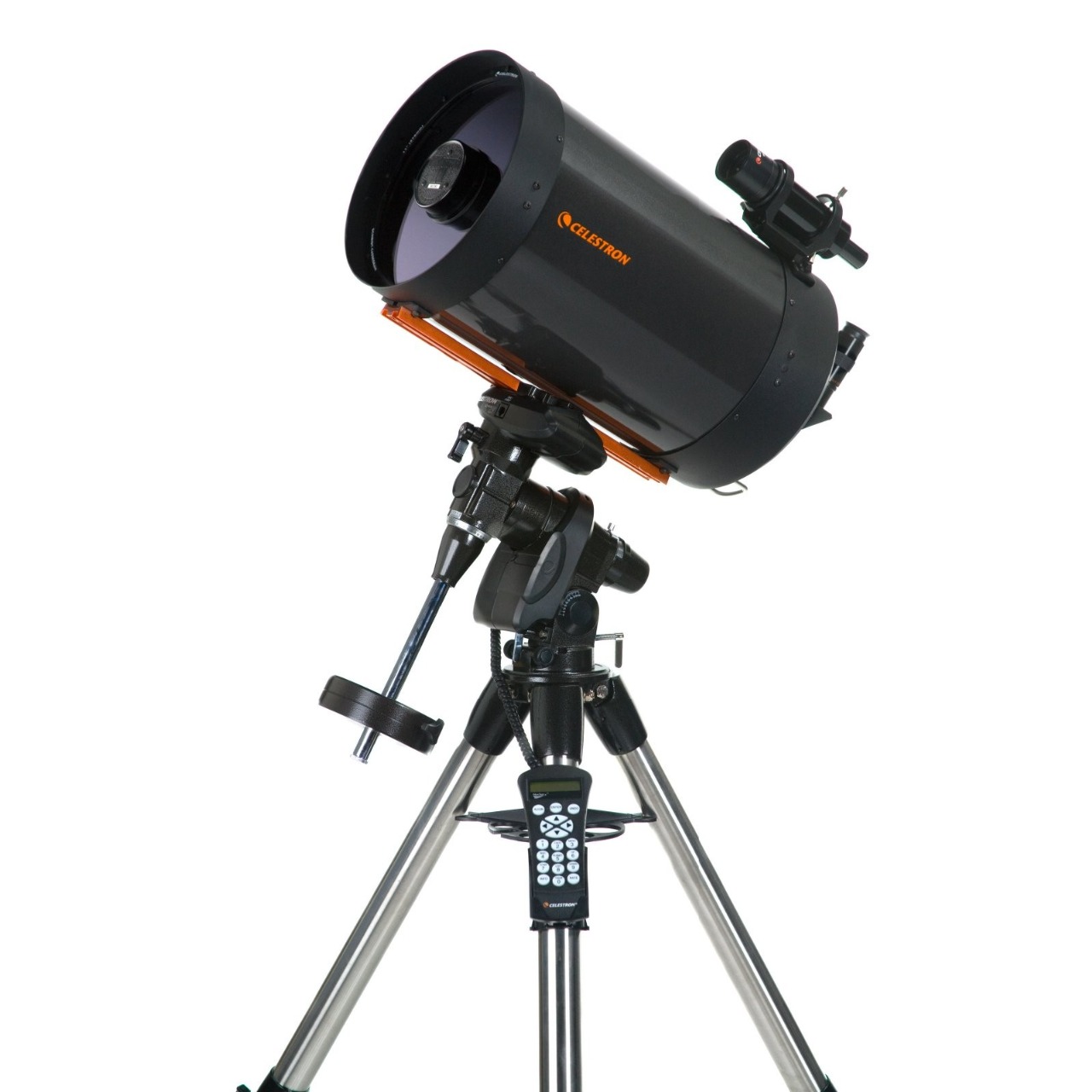
Catadioptric
A Catadioptric telescope uses a mixture of lenses and mirrors to form an image. The light enters through a skinny aspheric correcting lens, then hits the spherical primary mirror and is reflected back up the tube and intercepted by a small convex spherical secondary mirror which reflects the light out an opening in the rear of the instrument where the image is formed at the eyepiece.
Radio
Radio telescopes find noise from objects in space that give off radio noise.
Radio Telescopes change the noise into information for researchers to study.
A picture can be produced from the noise picked up from an object by the radio telescope.

X-Ray
X-ray telescopes are used to study objects in space. This include the sun, stars and supernovas. This type of telescope is best used above the Earth's surface because normal atmospheric pressure interferes with the x-ray signals they receive.

Gamma Ray
Gamma ray telescopes are best used at a high altitude, similar to the x-ray telescopes.
The signals from a gamma ray are disturbed and become less powerful when they enter the Earth's atmosphere.
Gamma ray telescopes help scientists confirm happenings in outer space like supernovas, pulsars and black holes.
